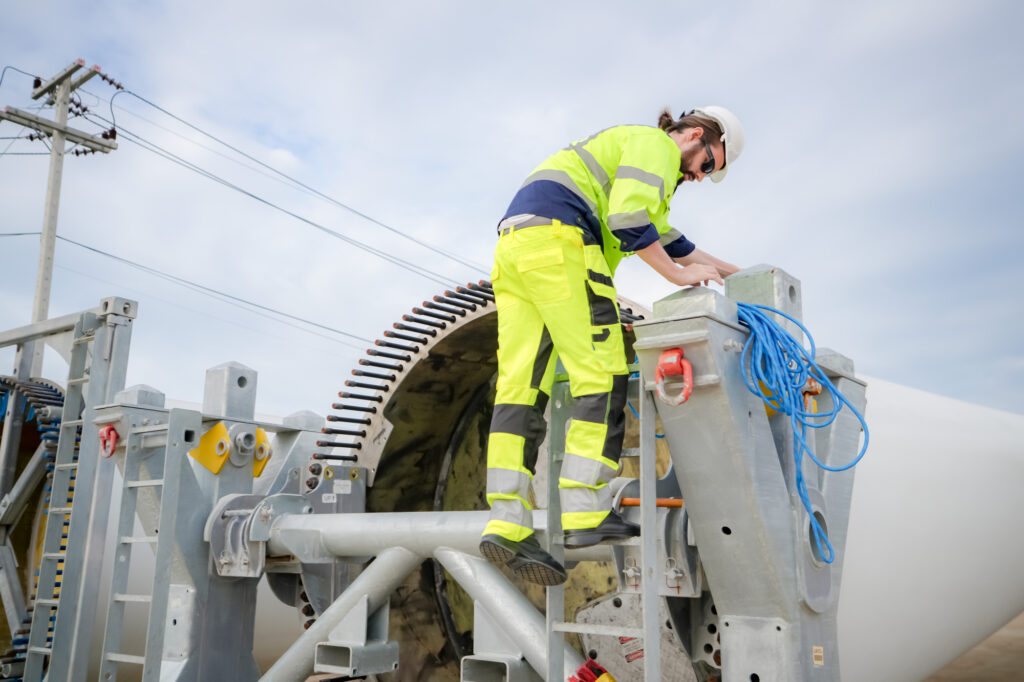
Offshore wind turbines operate in harsh marine environments, harvesting energy from powerful, unpredictable ocean winds. To maximize energy capture, the turbine’s upper housing—the nacelle—rotates continuously to track wind direction. This rotation, known as yaw movement, creates a severe mechanical challenge for internal electrical infrastructure.
The power and control cables hanging below the nacelle are subjected to severe, continuous twisting. Standard flexible cables quickly suffer from internal copper strand fatigue, jacket tearing, and insulation breakdown under this level of torsional stress.
To maintain continuous power generation and prevent catastrophic short circuits, renewable energy engineers rely on specialized offshore wind turbine cables engineered specifically for high-torsion drip-loop installations.
The Physics of Drip-Loop Dynamics and Torsional Stress
Inside a wind turbine tower, cables transitioning from the rotating nacelle down to the stationary tower section are suspended in a free-hanging vertical loop known as a drip loop.
SHF Mud Sheathing Compound Chemistry
The drip loop serves two vital mechanical functions:
Torsional Cushioning: It provides a free suspension zone where rotational twisting forces are distributed evenly across a vertical length of several meters.
Drip Protection: It allows condensation or moisture migrating down the cable bundle to drip off at the lowest point of the loop before reaching sensitive terminal switchgear.
Mechanical Torsion Stress Factors
Unlike standard cables that only experience bending stress along a single axis, cables in a drip loop experience simultaneous torsion (twisting), tension (hanging deadweight), and bending.
Key Construction Features of Torsion-Resistant Cables
To survive continuous twisting inside offshore turbine towers, these cables incorporate specialized mechanical and material design strategies:
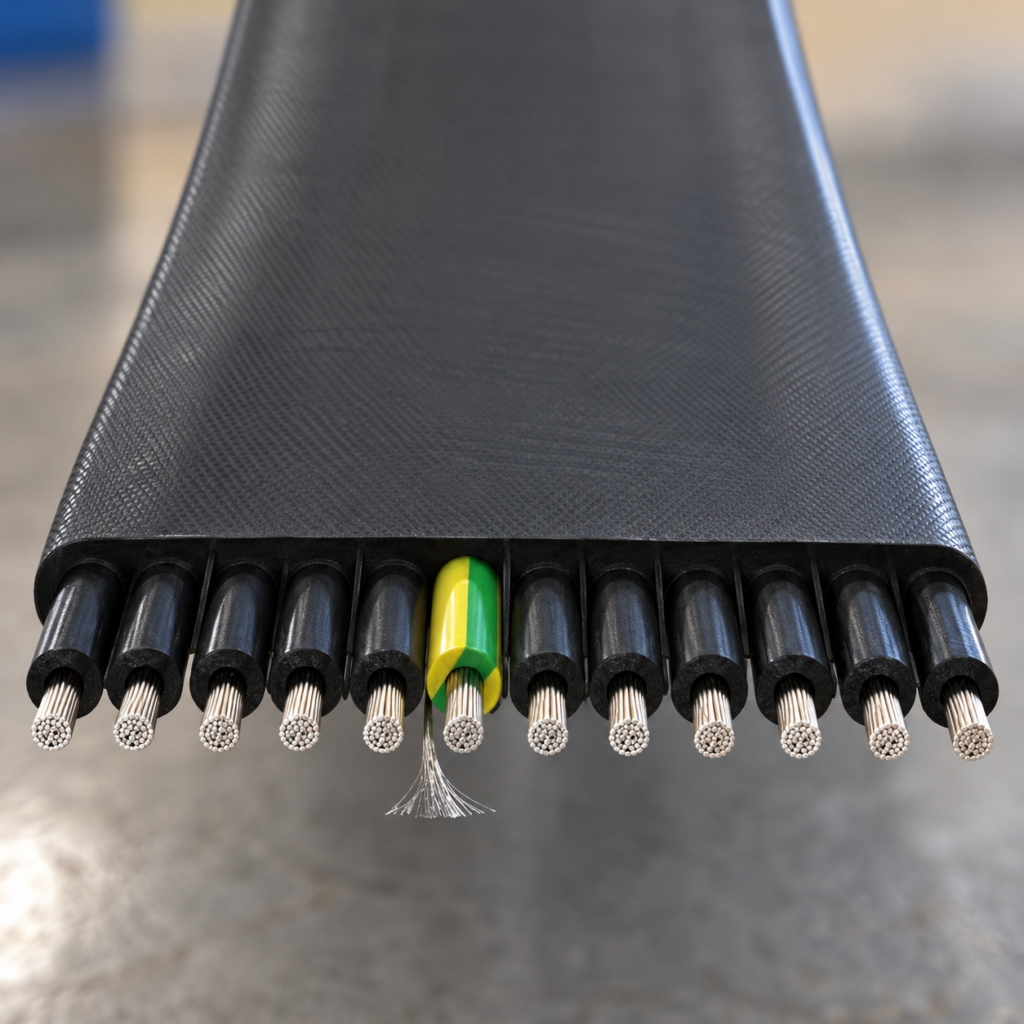
Fine-Stranded Annealed Copper Conductors
Utilizing Class 5 or Class 6 fine-stranded copper wires allows individual strands to slide past one another during twisting movements, minimizing localized metal fatigue and preventing “corkscrewing.”
Low-Friction Inner Separator Tapes
Polyester or PTFE separator tapes are wrapped around individual conductor cores and core bundles. This low-friction barrier prevents internal insulation layers from binding together during rotational shearing forces.
Torsion-Balanced Lay Geometry
Conductor pairs and cores are bunched using specialized lay lengths and alternating twist directions. This balanced geometry neutralizes internal rotational torque, preventing the cable from coiling or kinking.
Frequently Asked Questions (FAQs)
1. Why is a drip loop necessary inside a wind turbine tower?
The drip loop provides a free vertical suspension zone that absorbs nacelle yaw rotation while preventing condensation from reaching electrical switchgear below.
2. What happens if a non-torsion rated cable is installed in a wind turbine nacelle?
Continuous twisting forces work-harden the copper strands, leading to internal conductor breakage (“corkscrewing”), insulation tearing, and dangerous short circuits.
3. What international standards govern offshore wind turbine cabling?
Wind turbine cables typically comply with IEC 60228 (conductor classes), IEC 60332-3 (flame propagation), IEC 60754 (halogen-free content), and specific marine type approvals from DNV and ABS.
Power Your Renewable Energy Projects with High-Performance Cabling
Ensure maximum operational uptime and eliminate mechanical fatigue in your offshore wind installations. Cable Specialist supplies a complete range of certified torsion-resistant offshore wind turbine cables engineered to withstand harsh marine environments and continuous nacelle movement.
Explore Wind Energy Cables: Download technical datasheets for high-torsion power, control, and data transmission cables.
Consult Our Technical Team: Contact our offshore energy specialists today for custom engineering advice and project procurement support.