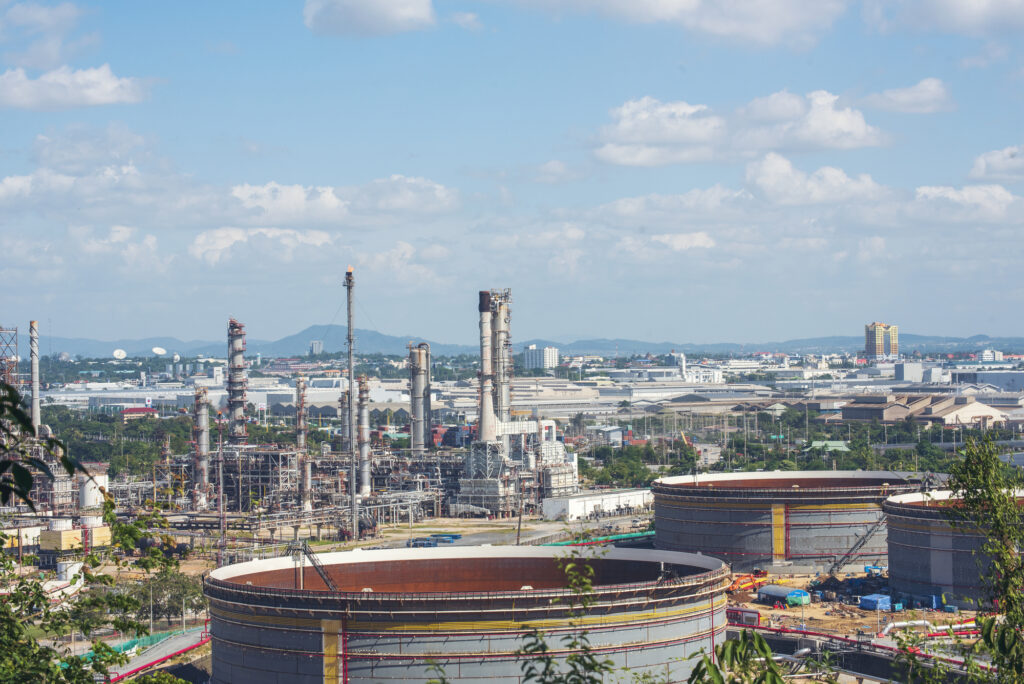
Industrial manufacturing environments such as steel foundries, glass manufacturing facilities, commercial bakeries, and petro-chemical processing units that expose electrical wiring to continuous high ambient heat. Standard PVC, rubber, or cross-linked polyethylene (XLPE) cable insulations begin to degrade rapidly at temperatures 90 degree celcius to 105 degree celcius leading to insulation hardening, cracking, and catastrophic short circuits.
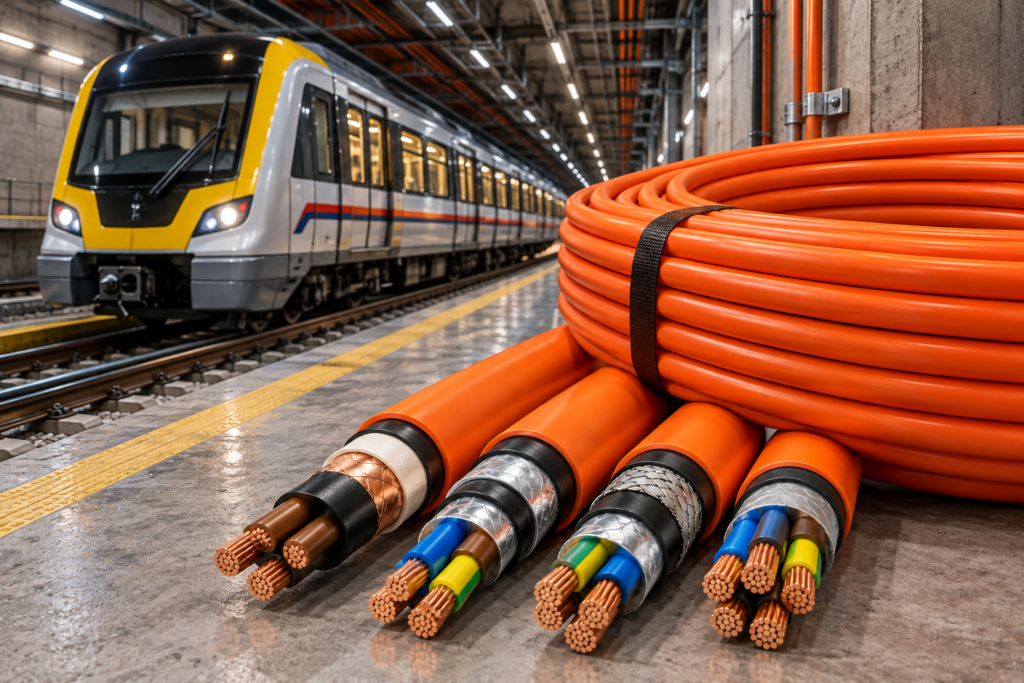
Maintaining reliable power delivery, sensor monitoring, and burner control in these environments requires specialized heat resistance cables. Utilizing advanced polymer chemistry including silicone rubbers and fluoropolymers. These cables preserve their flexibility, dielectric strength, and mechanical integrity even when exposed to extreme thermal conditions.
Polymer Chemistry: How Heat-Resistant Insulation Works
Standard organic polymers feature a carbon-to-carbon ( C–C ) backbone that breaks down under sustained high temperatures. Heat-resistant cable compounds replace or modify this structure to withstand thermal oxidation.
Silicone Rubber (SIR) Insulation
Chemical Structure: Built on a inorganic silicon-oxygen backbone with strong bond dissociation energy.
Thermal Range: Operates continuously from 60 degree celsius to 180 degree celsius with special formulations reaching 220 degree celsius. with special formulations.
Key Characteristic: Retains flexibility across its entire thermal range. If burned by direct flame, silicone leaves behind an insulating non-conductive silica ash, where the layer that helps maintain basic circuit isolation temporarily.
Fluoropolymer Insulation (PTFE / FEP / PFA)
Chemical Structure: Fluorine atoms form a tight, protective shield around the carbon backbone, creating a chemically inert compound.
Thermal Range: Operates continuously at temperatures up to 260 degree celsius.
Key Characteristic: Exceptional chemical resistance, hydrophobic performance, high mechanical toughness, and superior dielectric insulation in compact diameters.
Frequently Asked Questions (FAQs)
1. Why do standard PVC cables fail near industrial furnaces?
Standard carbon-to-carbon polymer backbones degrade rapidly under continuous heat above 90 degree celsius to 105 degree celsius, causing insulation cracking and short circuits.
2. What temperature range does Silicone Rubber (SIR) insulation support?
A: Silicone rubber operates continuously from 60 degree celsius to 180 degree celsius with special formulations reaching 220 degree celsius.
3. Why are nickel-plated conductors used instead of bare copper in extreme heat?
Bare copper oxidizes rapidly above 150 degree celsius, increasing resistance; nickel-plated or solid nickel conductors maintain electrical stability in extreme thermal zones.
Safeguard Your Subsea Energy Infrastructure
Ensure maximum operational uptime for your subsea power transmission projects. Apex Marine & Industrial Cables designs and delivers custom-armored offshore power cables engineered to withstand severe marine environments.
Download Subsea Cable Engineering Catalog: Explore technical specifications for single- and double-wire armored subsea power cables.
Request Offshore Project Consultation: Speak with our marine cable engineering team for customized mechanical armor recommendations.